Cuerdas Octavadas vs Cuerdas Pares

Octave-Paired Strings vs Unison-Paired Strings in Mexican Style

Cuerdas Octavadas vs Cuerdas Pares en el Estilo Mexicano - Karma Guitars, Inc.

Understanding 12-String Guitars: Octave Strings vs. Unison Paired Strings in Mexican Style

12-string guitars have been a fundamental part of the sound of entire generations in genres like folk, rock, and country. But in Mexico, these guitars took on a distinct character, driven by the creativity of local musicians and a very specific need: the lack of access to octave strings.

What are octave strings?

In the classic configuration of a 12-string guitar, the lower string pairs (the first four: E, A, D, and G) combine one string tuned to its natural note with another an octave higher. This creates a bright, expanded sound with a lot of harmonic air. It's the characteristic timbre we hear in bands like The Byrds or artists like Tom Petty.

The Mexican twist: unison paired strings

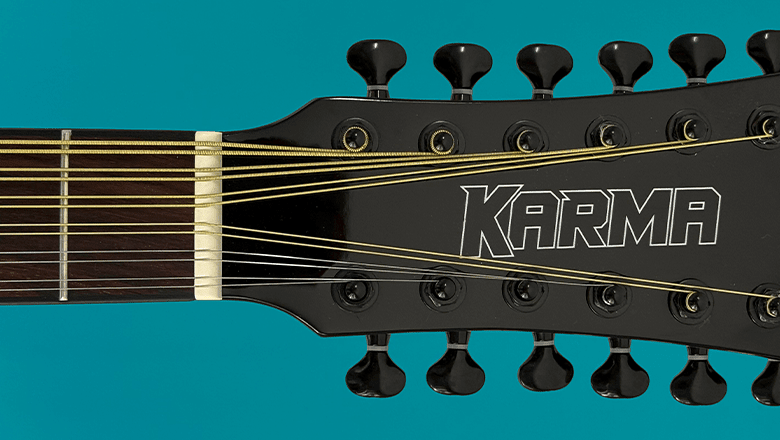
In Mexico, however, things took a different turn. Due to the scarcity of octave strings in many regions, especially in past decades, musicians began adapting their 12-string guitars by using two complete sets of standard strings, meaning tuning all pairs in unison, without octaving.

This adjustment created a more direct, solid, and uniform sound. Not as bright, but with more body and attack. What started as a practical solution eventually became a distinct style that now dominates the stages of regional Mexican music.

Who uses this style?

This approach is not an exception: it is the norm among the country's great requintists. Figures like Ariel Camacho, Miguel Montoya, Carlos Ulises Gómez, and almost any guitarist of the sierreño, campirano, or romantic requinto genres, use unison paired strings. It is estimated that more than 90% of Mexican guitarists using 12-string guitars employ this configuration.

Quick comparison

Characteristic Octave Strings Unison Paired Strings (Mexican Style)
Sound Bright, complex, airy Strong, thick, uniform
Technique Nuanced, articulated Precise, direct
Common Use Rock, folk, acoustic pop Sierreño, campirano, romantic requinto
Accessibility Requires special set Two standard sets
Preference in Mexico Uncommon Highly popular

Karma Guitars' commitment

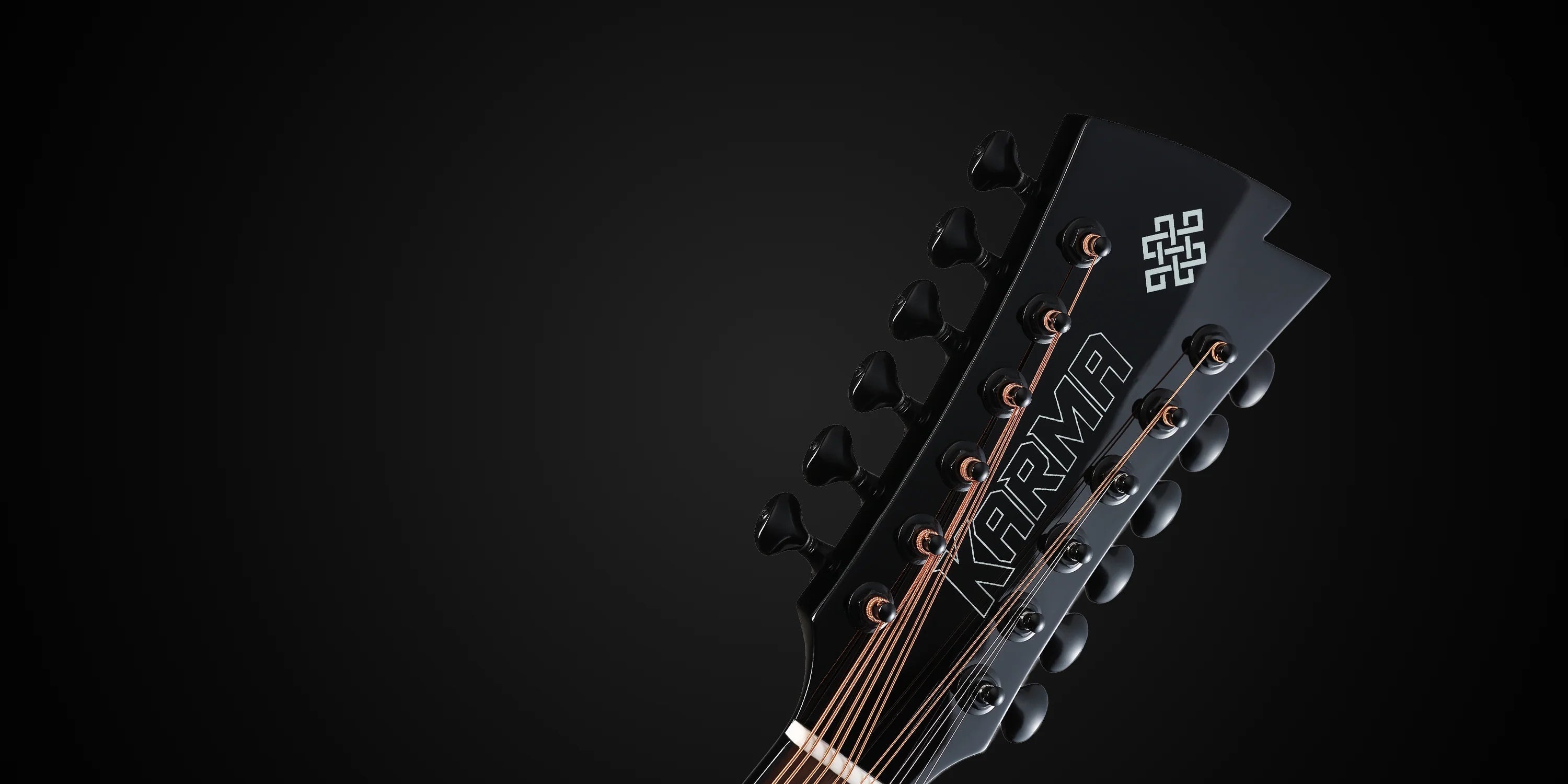
At Karma Guitars, we understand and value the traditions that define Mexican music. That's why we were the first brand in Mexico to configure our 12-string guitars from the factory with unison paired strings, using two sets of .010 – .047 gauge strings. This adjustment not only respects local customs but also enhances the characteristic sound that Mexican musicians have masterfully developed.

We don't do it because it's trendy; we do it out of conviction. Our commitment is clear: to serve Mexican musicians with tools that reflect their style, their identity, and their sound.

Leave a comment

Please note, comments need to be approved before they are published.

This site is protected by hCaptcha and the hCaptcha Privacy Policy and Terms of Service apply.

Ver otros blogs

View all

¿Las docerolas laminadas valen v...? La verdad sobre las tapas laminadas y sólidas. - Karma Guitars, Inc.

Are laminated tops worth it? The truth about laminated and solid tops.

It's not as simple as "laminated = sh*t". Solid tops vibrate more freely, project more, and mature with age; laminated tops project a little less but withstand bumps and climate changes better, ideal for rough use. For recording or for the guitar to 'breathe', look for solid; for your first 12-string or for everyday use, a good laminated one will do the trick, BE CAREFUL not to be fooled, there are laminated guitars and then there are laminated guitars.

Read moreabout Are laminated tops worth it? The truth about laminated and solid tops.

¿Se le arquea la tapa o se levanta el puente a tu docerola? - Karma Guitars, Inc.

Is the top of your docearola arching or is the bridge lifting?

The top arches up ("gets a little belly") and the bridge lifts because the 12 strings pull with enormous force, and over the years, a poorly reinforced top will yield. This is prevented with well-designed bracing, a reinforced bridge, and a factory-installed Bridge Doctor, in addition to maintaining stable humidity.

Read moreabout Is the top of your docearola arching or is the bridge lifting?

¿Por qué se desafina tu docerola? - Karma Guitars, Inc.

Why does your 12-string guitar go out of tune?

A twelve-string guitar goes out of tune mainly due to the enormous tension of its 12 strings, new strings that haven't settled yet, changes in climate, and a poorly cut nut. This can be controlled by always tuning 'upwards', stretching new strings, maintaining stable humidity (45–55%), and using a guitar with an adjustable truss rod and a nut cut for paired strings.

Read moreabout Why does your 12-string guitar go out of tune?

Cómo encordar tu docerola sin que se vuelva un martirio - Karma Guitars, Inc.

How to string your 12-string guitar without it becoming a nightmare

To string your twelve-string guitar without trouble: change a few strings at a time (never all 12 at once) so as not to suddenly release all the tension from the top; respect the position of each pair as they were originally; wind evenly and downwards on each tuning peg; stretch each new string by hand and retune several times until it settles. Always use the correct gauge (pair strings 10-47) to avoid straining the neck.

Read moreabout How to string your 12-string guitar without it becoming a nightmare

Cómo cambiar las cuerdas de tu guitarra de 6 : LA ARMONÍA - Karma Guitars, Inc.

How to Change the Strings on Your 6-String Guitar: LA ARMONÍA

To change your 6-string armonia strings: do it when they look dull or sound dead. Remove and replace them one by one (or a few at a time) to avoid suddenly releasing the tension, winding evenly and downwards on each tuning peg, leaving a little slack, cutting off the excess, and stretching each new string by retuning two or three times. The tuning is standard (E-A-D-G-B-E), so it's easier than with a 12-string guitar.

Read moreabout How to Change the Strings on Your 6-String Guitar: LA ARMONÍA