

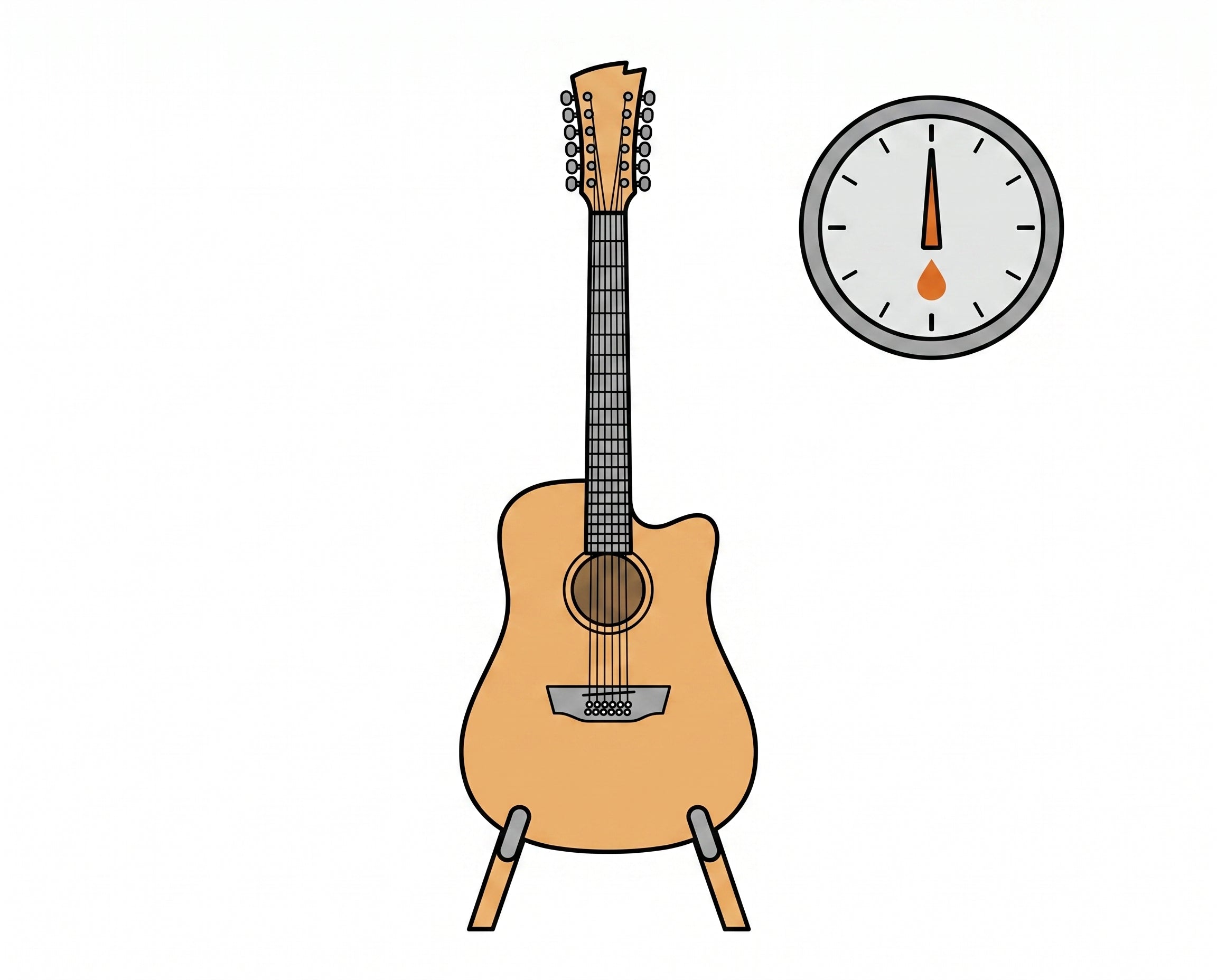
Caring for Your Instrument
Keeping your Karma in great condition is essential to its tone and its lifespan. We build every instrument in a workshop controlled at 50% relative humidity, an ideal level for keeping it stable through the wide humidity swings of northern Mexico and the rest of the world. Even so, no guitar is completely immune to the climate: quality tonewoods are naturally sensitive to changes in humidity.
Preserving your sound: the humidity balance
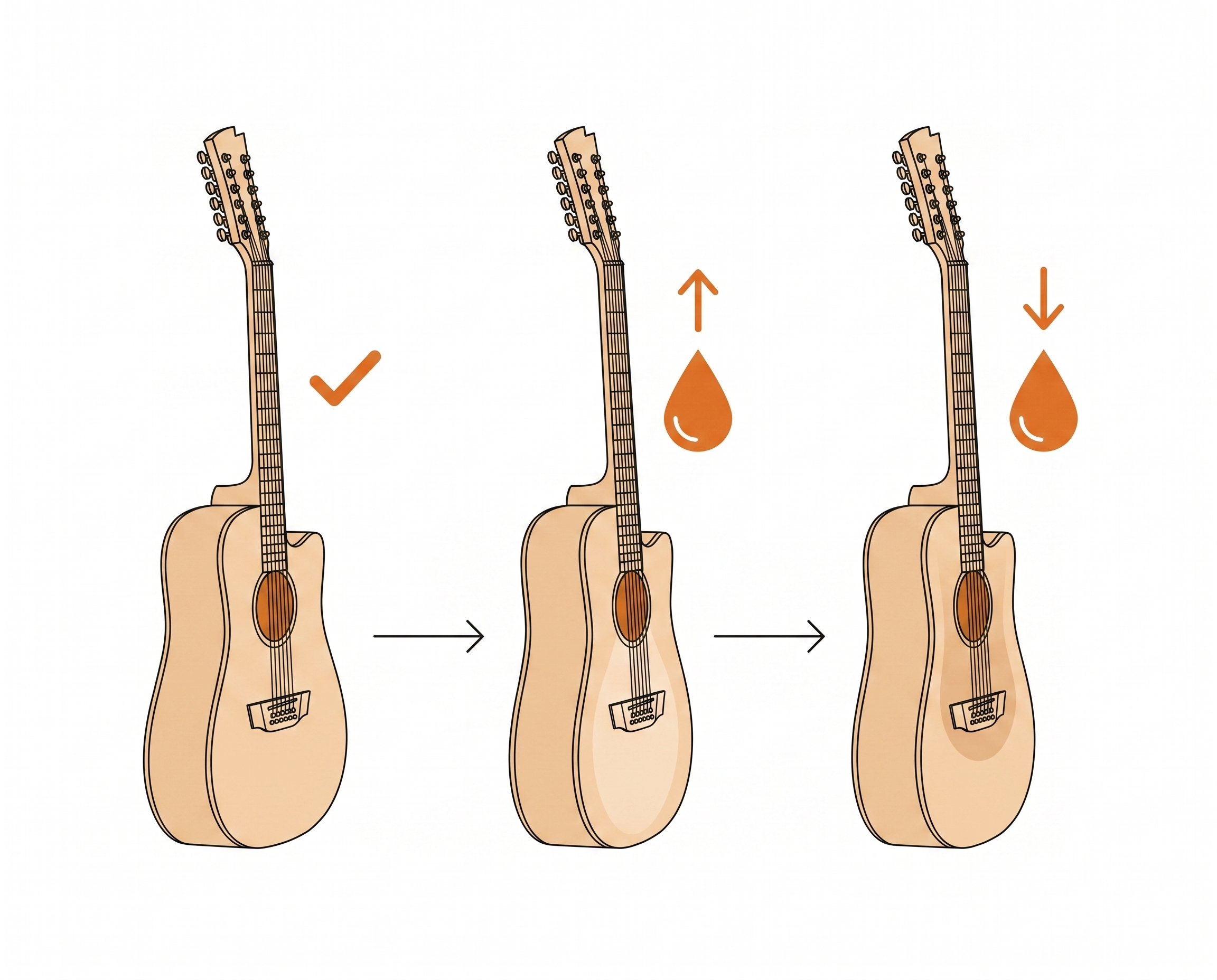
Well-seasoned woods reach a moisture equilibrium of about 8% when the relative humidity of the environment is around 50%. If humidity rises to 80% and stays high, the wood absorbs the excess: the top swells (what's known as a “panza” or belly) and the action rises. Conversely, prolonged exposure to low humidity (around 20%) causes the top to sink, the fret ends to stick out at the edges and the strings to buzz because of the low action. In both cases, the solution is to gradually reintroduce the guitar to ideal conditions until the wood returns to a balanced state.
Dealing with extreme climates
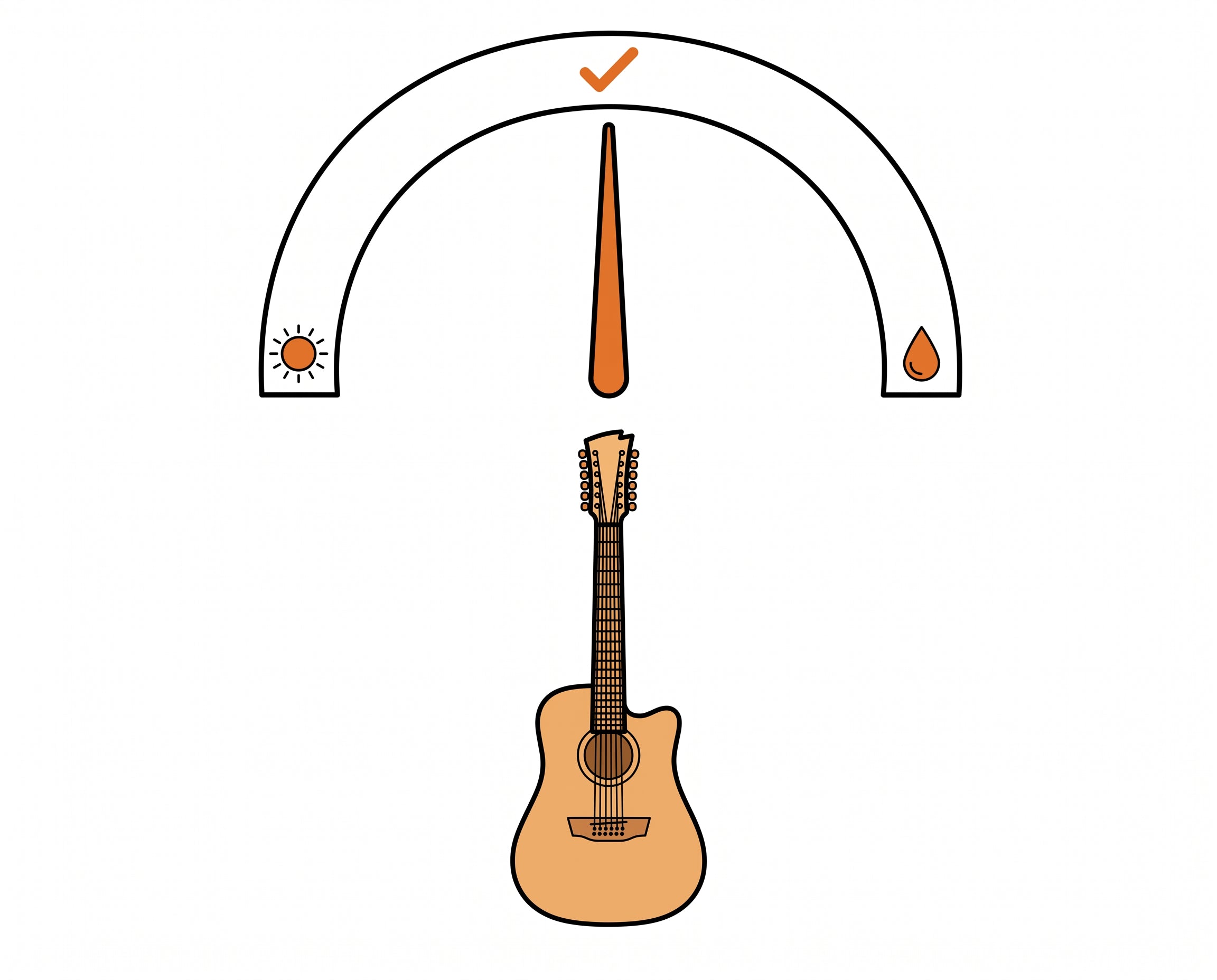
In Sonora and other parts of northern Mexico, relative humidity is usually between 30% and 60%, a range Karma guitars handle well. If your guitar is exposed to more extreme conditions, we recommend:
High humidity
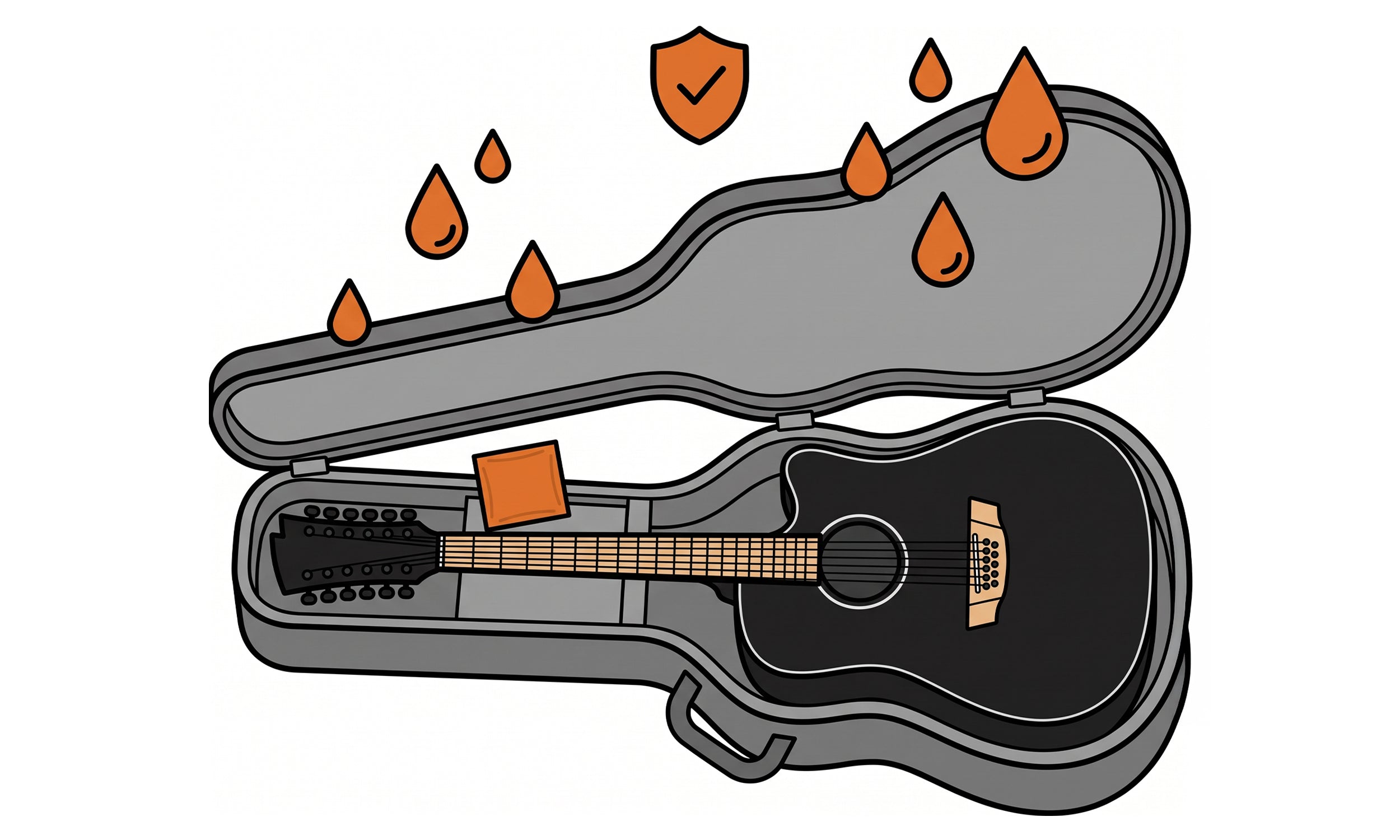
Store the guitar in its case when you're not using it, with a humidity control system. We recommend a two-way system like Boveda, which regulates and maintains a stable level (around 49%) inside the case. Instructions for use are on the Boveda website.

Low humidity
In dry environments, use an acoustic guitar humidifier inside the guitar and the case; it releases moisture slowly to keep the wood from drying out. Boveda is also a reliable option. Remember: wood takes time to absorb or release moisture; it isn't instant. Don't worry about playing a gig or rehearsal; just avoid exposing it unnecessarily to extreme environments for long periods.
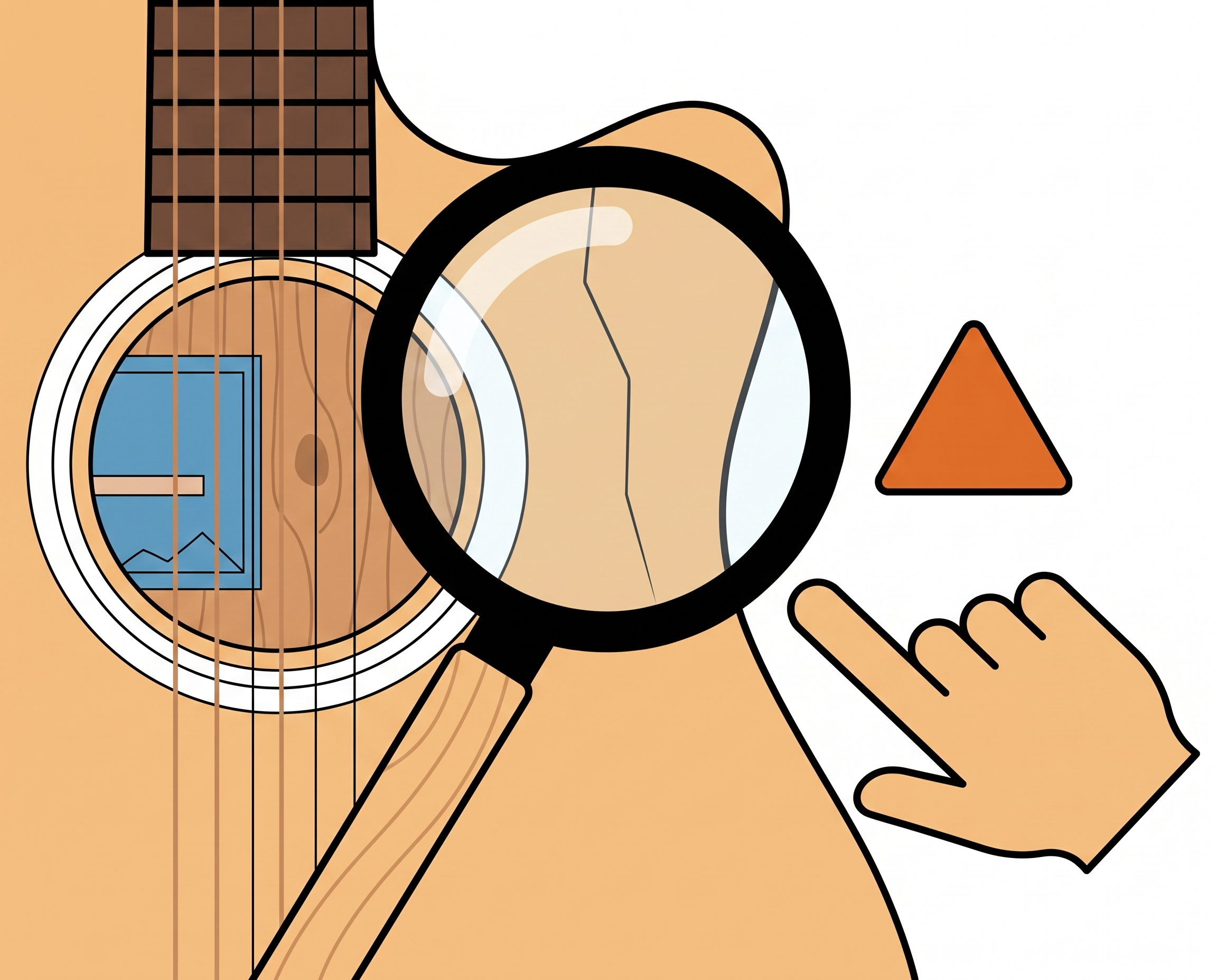
Humidity cracks
Cracks from prolonged exposure to very low humidity can show up on the top, back or sides: they're the result of the wood drying out and shrinking over time. Low-humidity damage is NOT covered by the warranty, so deal with any sign of a crack as soon as it appears; left untreated, a small crack can turn into a more serious one. Properly repaired by a professional, it won't affect the tone or structural stability of your Karma; early intervention is key.
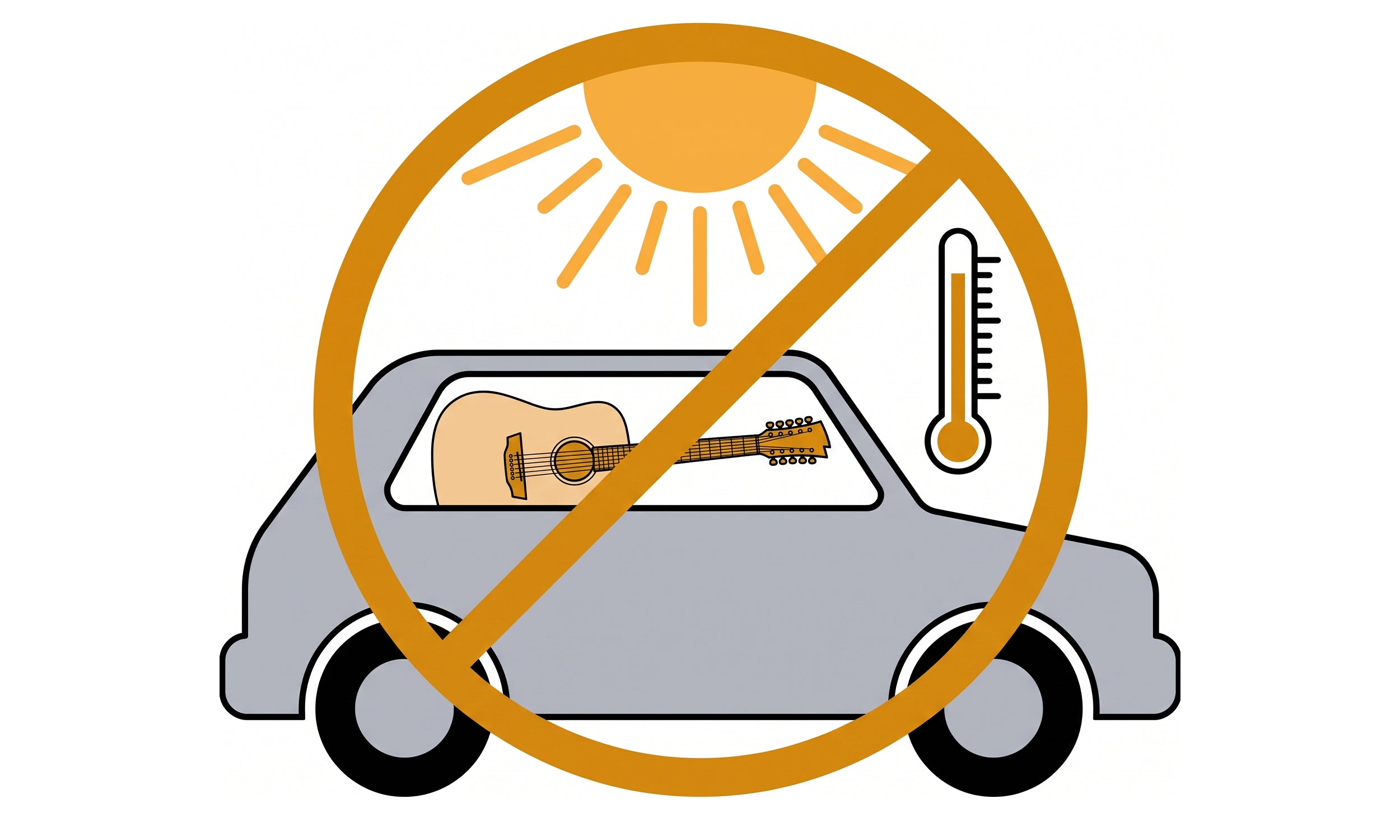
Excessive heat damage
Exposing your guitar to excessively high temperatures dries out the wood, even when the air is humid. Leaving it in a hot car or in direct sunlight for long periods can make it lose moisture fast, weaken the glue joints and cause warping, cracks or structural damage, sometimes difficult or impossible to fully repair. Always store it in a cool, shaded place, and avoid extreme heat at all costs.
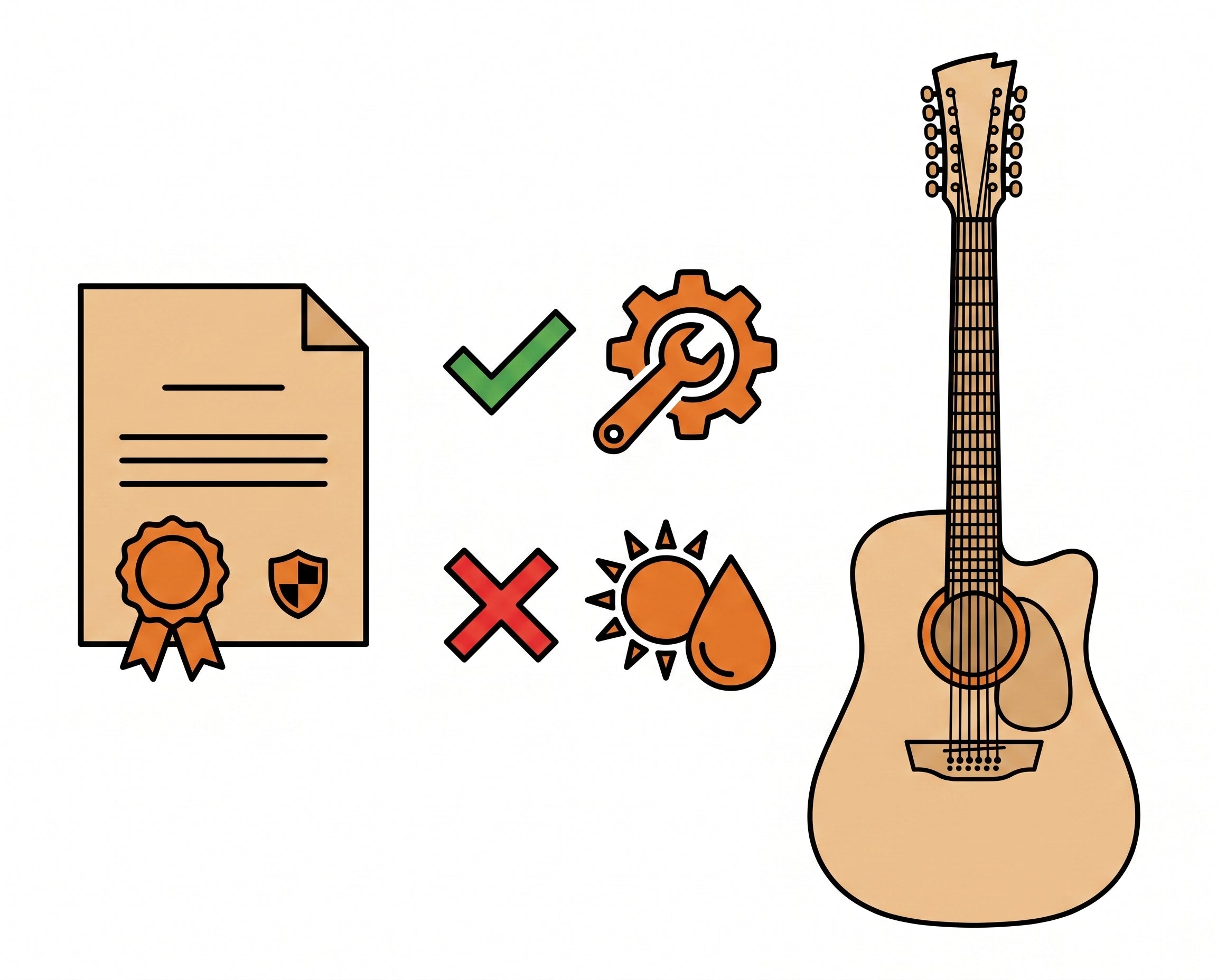
Warranty and humidity
Our warranty covers manufacturing and material defects, but it does NOT cover damage from humidity or extreme temperatures.
We recommend keeping an eye on the climate conditions where you store or play your instrument and taking preventive measures. A little care goes a long way.
For extra protection, we recommend a humidity control system like Boveda or equivalent inside the case.
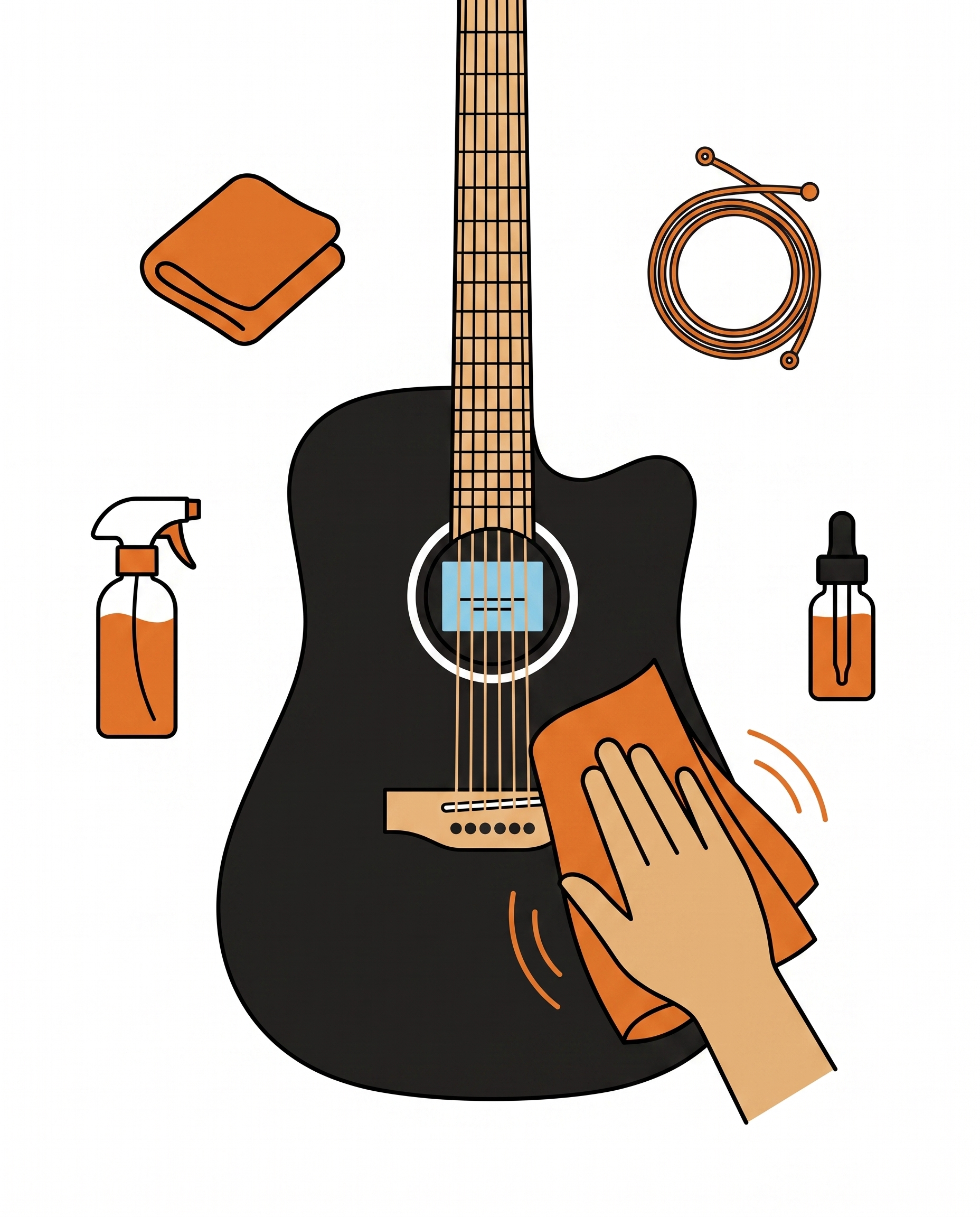
Cleaning and restringing
- After every session, wipe it down with a microfiber cloth to remove sweat, oils and dust.
- Once a month, polish it with a product made for acoustic guitars, applying it to the cloth and following the grain; avoid the fretboard.
- Fretboard: clean it with a cloth barely dampened with water. From time to time you can condition the wood with a mix of 90% mineral oil and 10% lemon oil, applying a little at each fret and wiping off the excess.
- Strings: wipe them down after playing so they last longer and sound clean. With regular use they last 1 to 3 months; change them when they sound dull or feel rough.
- Never use household cleaners, abrasive cloths or paper towels: they damage the finish.
- String gauge: we recommend the gauge suggested for your instrument. Dropping to a lighter gauge normally does no harm, but if you switch, take it to a tech for a setup.
- Neck or action adjustments: for any major adjustment, take it to a qualified tech or luthier.